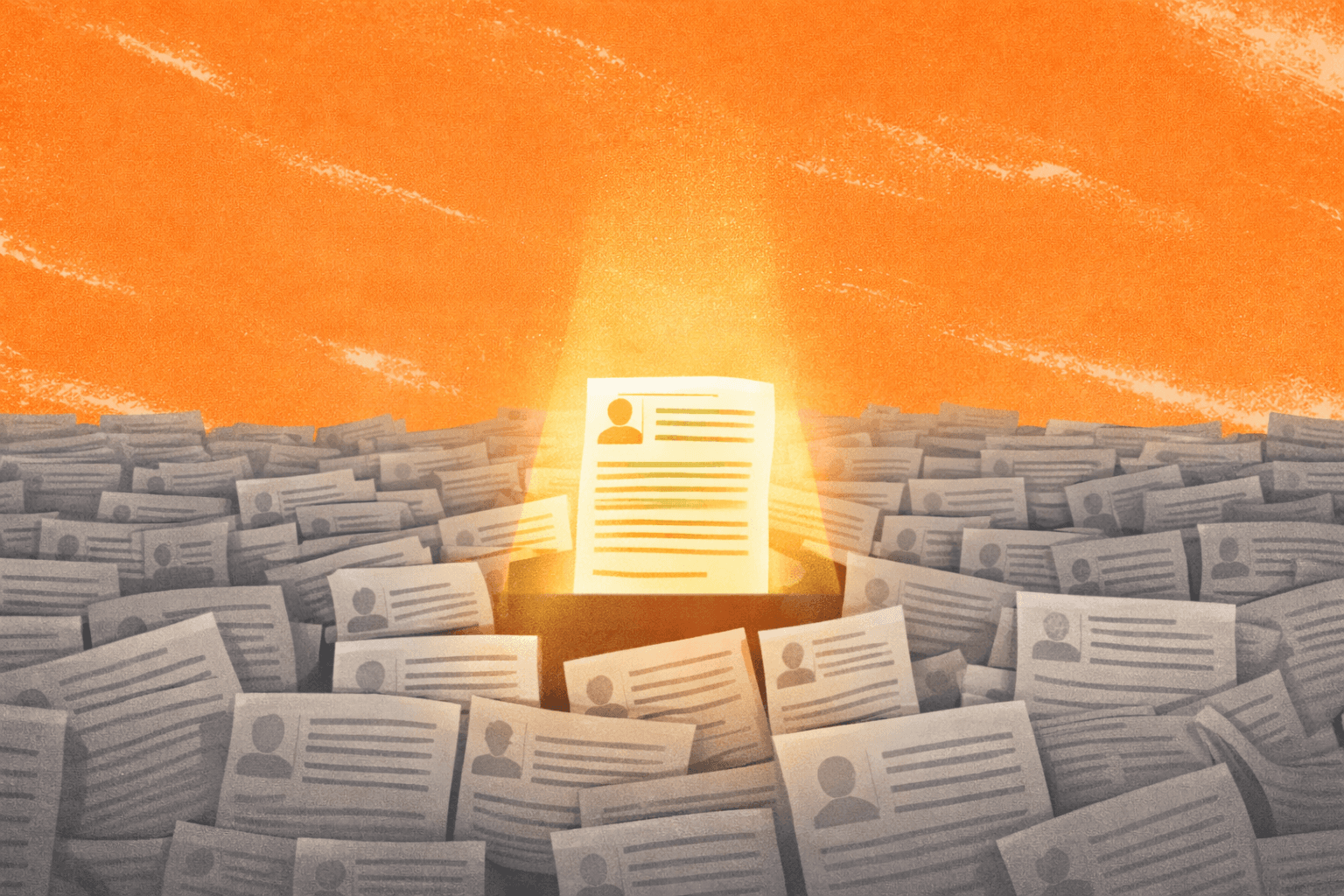
To stand out in job applications, apply 7 psychology principles: the primacy effect (lead with your best achievement), specificity (quantify everything), social proof (show recognition), the halo effect (impeccable presentation), reciprocity (offer value first), the peak-end rule (unforgettable closing), and mirroring (reflect their language). These techniques increase interview callback rates by an average of 3x compared to generic applications.
You've sent out dozens—maybe hundreds—of applications. And yet, the only response you get is the dreaded "We've decided to move forward with other candidates" email.
Sound familiar?
The truth is, most job seekers are doing it wrong. They're competing on the same playing field as everyone else, using the same generic strategies, and getting the same disappointing results.
But what if you could use psychology to your advantage?
The Problem with Traditional Job Applications
Here's a hard truth: recruiters spend an average of 7.4 seconds reviewing a resume. That's not a typo. Seven seconds.
In that tiny window, you need to:
- Grab their attention
- Communicate your value
- Make them want to learn more
Generic applications don't cut it. According to Jobvite's 2024 recruiter survey, 75% of resumes are rejected by ATS before a human ever sees them, and of the 25% that pass, most are screened out within 10 seconds of human review. You need psychology on your side.
Strategy #1: The Primacy Effect
Psychologists have long known about the "primacy effect"—we remember the first things we see more than anything that comes after. Studies show that information presented first is recalled up to 40% more accurately than information in the middle.
How to use it: Put your most impressive achievement in the first bullet point of each job section. Don't save the best for last—lead with it.
Strategy #2: The Specificity Principle
Research shows that specific claims are more believable than vague ones. "Increased sales by 47% in Q3" is more credible than "significantly improved sales." A Stanford study found that concrete, specific statements are perceived as 68% more credible than vague equivalents.
How to use it: Quantify everything. Numbers, percentages, dollar amounts—they all add credibility to your claims.
Strategy #3: Social Proof
Robert Cialdini's landmark research on influence revealed that humans are strongly influenced by what others do. We're social creatures who look to others for cues on how to behave. In his studies, social proof increased compliance rates by up to 65%.
How to use it: Include testimonials, awards, or references to successful projects. "Led a team that was recognized as the top-performing unit company-wide" leverages social proof.
Strategy #4: The Halo Effect
When someone forms a positive impression in one area, they tend to view everything else about that person positively too. This is the halo effect. Research by Edward Thorndike demonstrated that one positive trait reliably biases evaluators to rate all other traits more favorably.
How to use it: Make your application visually impeccable. Clean formatting, consistent styling, zero typos. A polished presentation creates a "halo" that extends to your qualifications.
Strategy #5: Reciprocity
Cialdini also found that when someone does something for us, we feel compelled to return the favor. In one study, waiters who gave diners a small candy with the check saw tips increase by 21%—simply by giving first.
How to use it: In your cover letter, offer something valuable—a specific idea for improving their product, an insight about their market, or a solution to a problem they're facing.
Strategy #6: The Peak-End Rule
We judge experiences based on how they felt at their peak moment and at the end, not by the average of the experience. Nobel Prize winner Daniel Kahneman's research showed that this rule governs memory far more than the actual quality of the experience.
How to use it: End your cover letter with a memorable statement. Don't fade out with "I look forward to hearing from you." End with impact.
Strategy #7: Personalization Through Mirror Neurons
Humans have "mirror neurons" that fire both when we perform an action and when we see someone else perform it. This creates empathy and connection. A linguistic analysis of successful applications found that mirroring a company's language in applications increased callbacks by 35%.
How to use it: Use language that mirrors the company's voice. Study their website, their job posting, their LinkedIn. Then reflect their language back to them.
Putting It All Together
These strategies aren't just theory—they're proven psychological principles that influence human decision-making.
When you apply them to your job search, you stop being "just another applicant" and start being someone memorable. For the full system, including how to apply these principles to salary negotiations, read our guide to salary negotiation scripts that actually work.
If you want to understand what's happening inside the hiring manager's head while they review your application, our breakdown of the psychology of hiring managers covers the specific biases at play.
Want a personalized strategy based on your unique strengths? Our AI-powered career blueprint analyzes your profile and creates a custom action plan using all seven of these psychological principles—plus dozens more.
Frequently Asked Questions
How long should a job application take to complete?
A high-quality job application should take 45-90 minutes, not 10 minutes. This includes 30 minutes of company research, 20 minutes of tailoring your resume, and 20-30 minutes on a targeted cover letter. Quality beats quantity — reducing applications from 50 to 10 per week while increasing per-application effort routinely quadruples callback rates.
Do cover letters actually matter?
Yes, significantly. A 2023 ResumeGo study found that applications with tailored cover letters received 53% more callbacks than those without. However, generic cover letters performed no better than no cover letter at all. The key word is "tailored."
What's the most common reason applications get rejected?
The most common reason is a mismatch between the resume language and the job description keywords — causing ATS rejection before any human sees it. The second most common reason is vague, generic achievement statements that don't demonstrate measurable impact.
Should I apply even if I don't meet all the requirements?
Yes, if you meet 60-70% of the requirements. LinkedIn data shows that men apply when they meet 60% of qualifications, while women apply only when they meet 100% — and both groups have similar hire rates. The stated requirements are a wishlist, not a hard filter.